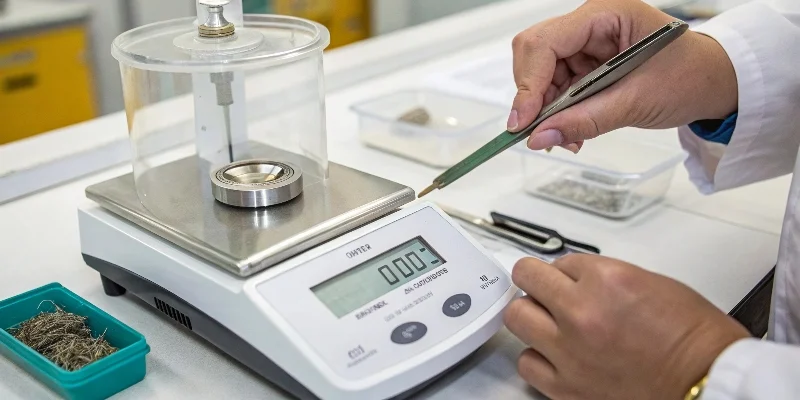
In the world of science and industry, close enough is never good enough. Whether you are mixing compounds in a pharmaceutical lab in Montreal or weighing precious metals in a mining facility in Northern Ontario, the accuracy of your measurements defines the quality of your work. A simple error of a few milligrams can ruin an entire production batch or invalidate crucial research data.
For Canadian businesses and research facilities, reliable equipment is the backbone of daily operations. When it comes time to upgrade your laboratory or production floor, finding high-quality precision balances for sale is a critical step that requires careful consideration. You aren’t just buying a machine; you are investing in the integrity of your results.
Why Accuracy Matters in Canadian Industries
From coast to coast, various sectors rely heavily on precise measurements. In Canada, standards are rigorous, and regulatory compliance is mandatory.
- The Cannabis Sector: Since legalization, producers must adhere to strict Health Canada regulations. Every gram counts for inventory tracking and potency testing.
- Food Processing: Ensuring the correct ratio of ingredients is vital for taste, safety, and meeting labeling requirements defined by the CFIA (Canadian Food Inspection Agency).
- Academic Research: Universities across the country require top-tier equipment to publish valid, peer-reviewed studies.
If your equipment drifts or loses calibration, you risk non-compliance and financial loss. This is why sticking with trusted manufacturers like Ohaus, A&D, Sartorius, and Radwag is a smart move. These brands are known for durability and precision, ensuring that your measurements stand up to scrutiny.
Choosing the Right Balance for Your Needs
Not all scales are created equal. An industrial warehouse has very different needs than a clean-room laboratory. When browsing for equipment, consider the “readability” you need. Do you need to see weight down to 0.1g, or do you need 0.0001g precision?
You also need to think about the environment. Is your workspace dusty? Is it humid? Some balances from brands like A&D or Ohaus come with IP ratings that protect against water and dust, making them perfect for harsher industrial environments.
Authorized Dealers vs. Generic Sellers
It is always safer to buy from an official dealer. Authorized dealers guarantee that the warranty is valid and that the unit hasn’t been tampered with. They also have the technical know-how to help you set up the device correctly. Companies that officially deal in major brands like Radwag and Sartorius can also assist with calibration services, ensuring your balance remains accurate year after year.
Common Questions About Weighing Scales
Here are some frequent questions people have when looking for weighing equipment.
What is the difference between a precision balance and an analytical balance?
A precision balance usually measures to 0.1g or 0.001g (2-3 decimal places), while an analytical balance is much more sensitive, measuring to 0.0001g (4 decimal places) or better.
How often should I calibrate my laboratory balance?
It is best practice to calibrate your balance at least once a year, or more frequently if it is moved, subjected to temperature changes, or used for critical legal-for-trade applications.
What external factors affect weighing accuracy?
Vibrations from nearby machinery, air drafts from HVAC systems, static electricity, and temperature fluctuations can all cause your numbers to drift.
Do I need a “Legal for Trade” balance?
If you are buying or selling goods based on their weight (like gold, deli meat, or cannabis), Canadian law requires you to use a Measurement Canada approved “Legal for Trade” scale.
Maintenance Tips for Longevity
To keep your investment working correctly, treat it with care. Always level the balance using the adjustable feet and the spirit bubble. Keep the weighing pan clean and free of debris. Most importantly, never overload the scale beyond its maximum capacity, as this can permanently damage the sensitive internal load cell.
When you are looking for a vendor who understands these nuances, it helps to work with experts. Data Support has built a reputation for helping Canadian businesses find the exact weighing solutions they need. By offering top-tier brands and expert advice, they ensure you aren’t just guessing when you make a purchase.
Conclusion
Investing in the right weighing equipment is an investment in your professional reputation. By choosing reputable brands and maintaining your equipment properly, you ensure that your data remains accurate and your operations run smoothly. Whether you are in a university lab or a manufacturing plant, the right tools make all the difference.