The static, lecture-style training room is a relic of the past. In 2026, the definition of a “workspace” has dissolved into a fluid concept where learning, collaborating, and creating happen simultaneously. We are no longer designing rooms for passive listening; we are engineering ecosystems for active engagement. Imagine walking into a space that instinctively knows what you need—whether it’s a breakout session for five, a seminar for fifty, or a hybrid workshop connecting teams across three continents.
Achieving this level of adaptability isn’t just about knocking down walls; it is about curating the right tools. Companies like Meet&Co have long understood that furniture is not merely infrastructure; it is the hardware of company culture. As we navigate the complexities of hybrid work models this year, the layout and utility of our collaborative spaces will directly dictate the speed of innovation and the depth of employee retention.
The Shift: Why Flexibility is the New Currency
The rigid rows of the 2010s have given way to “agile zones.” The primary driver for this shift is the realization that collaboration is rarely linear. A brainstorming session might morph into a presentation, which might then break apart into individual focus work—all within an hour. Designing for 2026 means accepting that the room’s purpose will change multiple times a day.
- Agility over Permanence: Fixed furniture is a liability. Modern design prioritizes mobility, allowing users to “hack” the space to suit their immediate needs.
- Hybrid Inclusivity: The physical space must account for virtual participants, ensuring that furniture arrangements don’t block camera angles or alienate remote attendees.
- Multi-Modal Learning: Different people learn differently. A well-designed room offers high stools for quick huddles, soft seating for relaxed dialogue, and traditional desks for focused note-taking.
Zoning: The Architecture of Collaboration
A successful collaborative space is rarely a single open hall. Instead, it is a collection of micro-environments or “zones” that coexist. When planning your layout, think in terms of energy levels. You need “High Energy” zones for brainstorming, equipped with whiteboards and standing desks, and “Low Energy” zones for contemplation and deep discussion, furnished with acoustic pods and lounge seating.
Visual cues are essential here. Different flooring textures, lighting temperatures, and furniture heights can subtly signal to employees how a space should be used without the need for signage. This intuitive design reduces friction and helps teams settle into their work faster, creating a landscape that supports both extroverted collaboration and introverted focus.
The Backbone of the Room: Selecting the Right Infrastructure
When choosing the foundational elements of your collaborative space, durability and modularity are non-negotiable. You are looking for pieces that can withstand constant reconfiguration without losing their structural integrity. This brings us to the core category of training room furniture.
When we talk about the “best in the world,” industry titans like Steelcase and Herman Miller immediately come to mind. These brands have set the global gold standard by treating furniture as an extension of the human body. They invest millions in R&D to understand how people sit, move, and interact. The best brands in the world are defined not just by aesthetics, but by their commitment to ergonomic science and sustainable manufacturing. They create ecosystems where tables nest intuitively and chairs support a wide range of postures, ensuring that the physical environment never hinders the intellectual process.
Technology Integration: The Invisible Enabler
In 2026, furniture and technology are no longer separate entities. High-performance furniture must accommodate the digital layer of our work. This means moving beyond simple grommet holes for cables. If the technology is clumsy or hard to access, the collaboration stalls. The goal is seamless integration where the tech supports the interaction without becoming the focal point.
Essential Tech-Ready Features:
- Integrated Power: Tables and soft seating should have built-in USB-C and standard power outlets. No one should have to crawl on the floor to charge a laptop.
- Wireless Charging Surfaces: Tabletops that charge devices on contact reduce clutter and anxiety.
- Cable Management Spines: Vertebrae-like cable managers that move with height-adjustable tables prevent tangling and maintain a clean visual aesthetic.
Maximizing Space: The Art of Transformation
Real estate is expensive, and dedicating a large room solely to training that happens once a week is a waste of resources. The modern collaborative space must be a shapeshifter. This is where the specific mechanics of your furniture play a crucial role.
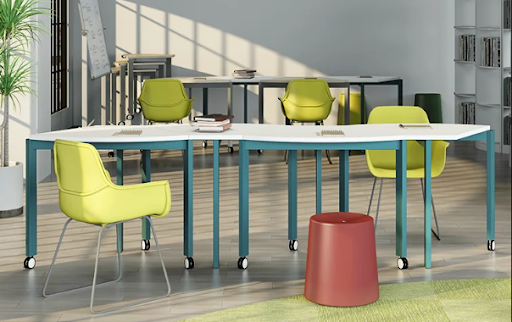
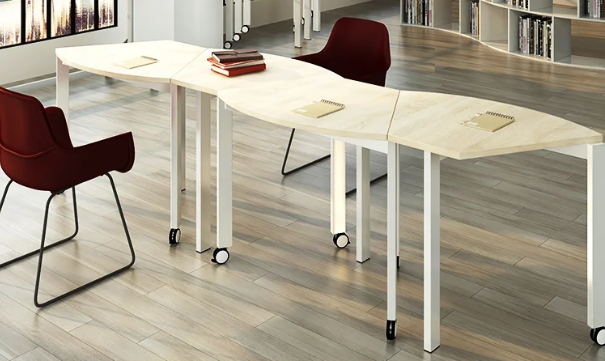
High-quality folding tables are the unsung heroes of multi-use spaces. By utilizing flip-top mechanisms and nesting capabilities, a room can transform from a 30-person lecture hall to an open yoga studio or a networking cocktail space in under ten minutes. The mechanism must be smooth enough for a single person to operate with one hand, and the casters must be robust enough to roll over carpet thresholds without getting stuck. This transformational ability effectively doubles or triples the utility of your square footage.
Benefits of High-Performance Design
Investing in high-quality, flexible furniture is not just an aesthetic choice; it is a strategic business decision. The Return on Investment (ROI) is visible in employee output and facility efficiency.
- Enhanced “Passive Mentoring”: Open, comfortable layouts encourage junior staff to observe and interact with senior leaders naturally, facilitating organic knowledge transfer.
- Increased Retention: Top talent expects a workspace that supports their well-being. A high-performance environment signals that the company values its employees’ health and comfort.
- Space Optimization: Instead of leasing more space, flexible furniture allows you to do more with the square footage you already have. A single room can serve as a training center, a boardroom, and a social hub.
- Reduced Churn Costs: High-quality commercial furniture is built to last 10-15 years. While the upfront cost is higher, the replacement cycle is significantly longer than “fast furniture” alternatives.
Acoustics and Lighting: Setting the Mood
One of the biggest complaints in open collaborative spaces is noise. High-performance design must address acoustics just as aggressively as it addresses aesthetics. Hard surfaces like glass and concrete bounce sound, creating a cacophony that makes focus impossible. Utilizing acoustic baffles or high-backed soft seating can create “rooms within rooms” that dampen sound.
Similarly, lighting dictates the energy of the room. Cool, bright light (4000K-5000K) promotes alertness and is ideal for active training sessions, while warmer, dimmer light (2700K-3000K) encourages trust and relaxation, making it better for feedback sessions. Smart lighting systems that adjust color temperature throughout the day can help maintain circadian rhythms and prevent afternoon fatigue.
Expert Tips for a Seamless Setup
Designing these spaces requires a blend of strategy and empathy. Here are three actionable tips to ensure your project succeeds:
- Involve the Team Early: Don’t design in a vacuum. Survey your employees to ask how they actually use the current space. You might find that they need more quiet corners for deep work rather than more large conference tables.
- Test Drive the Mechanisms: Before buying bulk, order a sample unit. Test the flip-top mechanism of the tables and the rolling casters on your specific flooring. If it feels clunky to you, it will be a frustration for your team every day.
- Prioritize “Passive Ergonomics”: In a shared space, no one adjusts the chair. Choose seating with weight-activated mechanisms that automatically adjust the recline tension based on the user’s body weight. This ensures instant comfort for every user without the need for manual fiddling.
Frequently Asked Questions (FAQs)
Q: How much space should I allocate per person in a collaborative training room? A: For a standard classroom setup, allow 15-18 square feet per person. However, for a collaborative setup with movable tables and active learning zones, aim for 25-30 square feet per person to allow for free movement and reconfiguration.
Q: Is mesh or fabric better for training room seating? A: Mesh is generally preferred for shared seating. It is breathable, keeping users cool during long sessions, and is easier to clean and sanitize than fabric. It also conforms to different body shapes more universally than rigid padded foam.
Q: How do I future-proof my collaborative space? A: Focus on modularity and power. Avoid building fixed millwork (built-in desks/cabinets) that cannot be moved. Ensure your floor grid has ample power sources so that if you change the room layout in two years, you aren’t limited by where the outlets are located.
Conclusion
Designing a collaborative space in 2026 is an exercise in empathy and foresight. It is about understanding that work is a human activity that thrives on connection, comfort, and adaptability. By investing in high-performance furniture that prioritizes flexibility, integrating technology thoughtfully, and respecting the human need for ergonomic support, you are not just filling a room; you are fueling a movement.
The right environment acts as a catalyst. It removes the physical barriers to communication and invites your team to bring their best ideas to the table. As you plan your next redesign, remember that the goal is not perfection—it is progress. Create a space that can evolve as fast as your business does.